Garage Lighting Guide
As an Amazon Associate I earn from qualifying purchases.
Most garages come with a single dim bulb that leaves the corners in shadow and makes detailed work nearly impossible. Good lighting is one of the cheapest and most transformative upgrades you can make, turning a gloomy storage room into a genuine workspace where you can see what you are doing. Whether you use your garage for parking, projects, or both, a thoughtful lighting plan pays off every time you flip the switch.
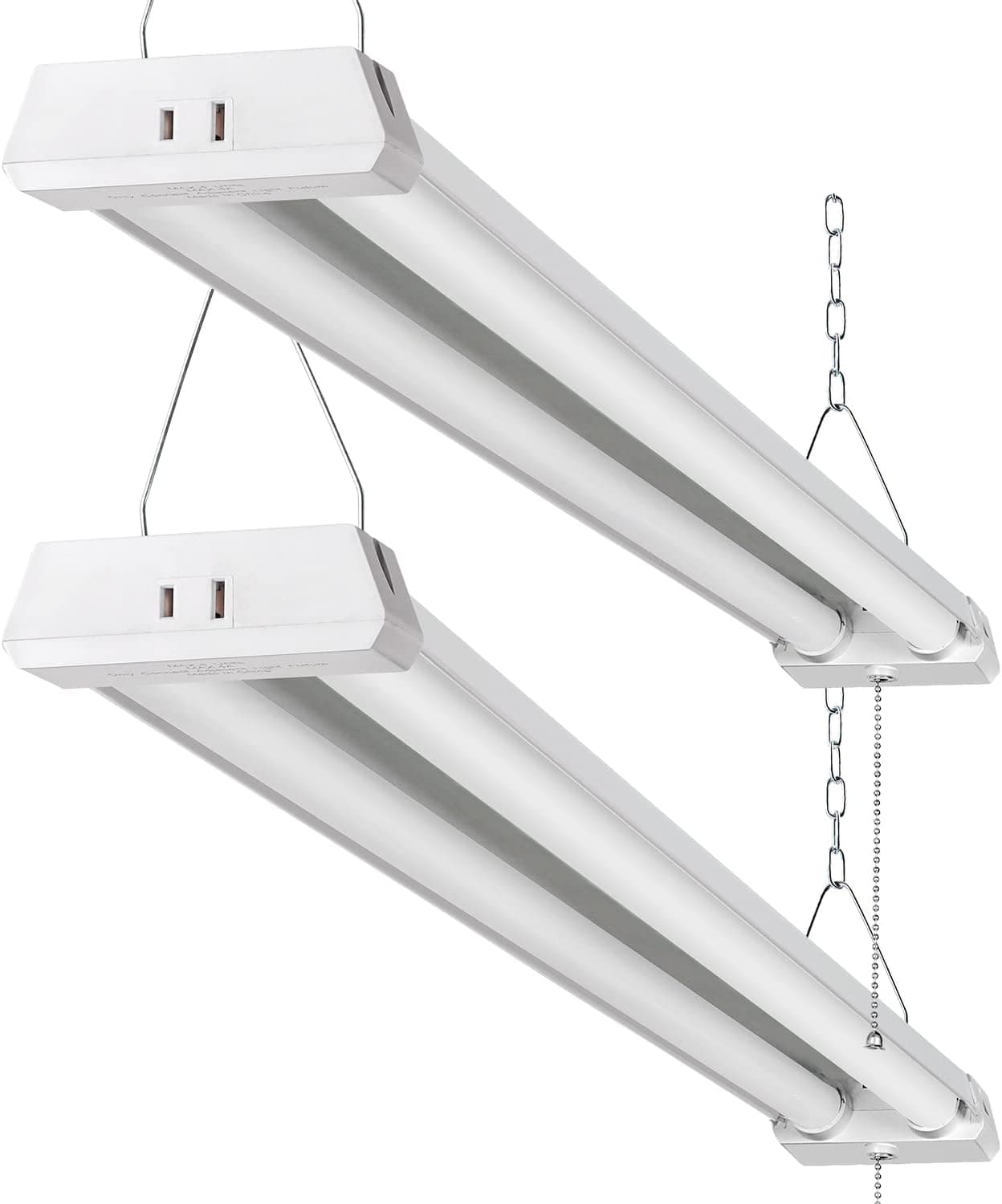
LED shop lights are the clear choice for general garage lighting today. They are energy efficient, run cool, turn on instantly even in cold weather, and last for years. The linked, hanging LED fixtures that plug in and chain together are especially popular because they are easy to install without hardwiring, and you can connect several in a row to blanket the ceiling in even light. For a cleaner look, flush-mounted LED panels or wraparound fixtures work well too.
Brightness matters more than most people realize, and it is measured in lumens rather than watts. A dim garage might have only a few hundred lumens, while a well-lit workspace wants far more. As a general approach, add up the lumens across all your fixtures and aim for bright, shadow-free coverage across the whole floor. It is hard to have too much light in a garage, so err on the generous side, especially over work areas.
Color temperature affects how the space feels and how well you can see fine detail. Measured in Kelvin, warmer light in the lower range feels cozy but can be dull for work, while cooler, daylight-range light in the higher range renders colors accurately and keeps you alert. For a working garage, a cool, daylight-toned light is usually the best pick, since it mimics natural daylight and makes it easy to spot small parts and read labels.
Placement is where a good plan comes together. Spread your ceiling fixtures evenly so the whole floor is covered without dark pockets, and pay attention to shadows cast by your own body when you stand at the bench. Position lights so they illuminate your work from more than one angle. Over a workbench, mounting a fixture slightly in front of where you stand keeps your shadow from falling directly onto your project.
Do not forget task and accent lighting for the spots that need it most. An under-cabinet or over-bench strip light gives you focused brightness for detailed work. Motion-activated lights are handy near entry doors so your hands stay free when you walk in carrying groceries or gear. If your garage doubles as a workshop, consider a dedicated bright fixture right over your primary work zone. Layering general and task lighting this way gives you a garage that is both bright overall and sharply lit exactly where you need it.