Mr. Heater Overhead Infrared Propane Heater, 60,000 BTU, Model 8060 LA-5 Review (2026)
Updated September 20, 2026 · Research-based review
Our verdict
Mr. Heater's overhead infrared propane heater delivers 60,000 BTU of radiant heat aimed at people and surfaces, suited to large detached garages and shops. Propane operation means proper clearance and ventilation planning, and permanent overhead mounting is best handled by a qualified installer rather than a DIY job.
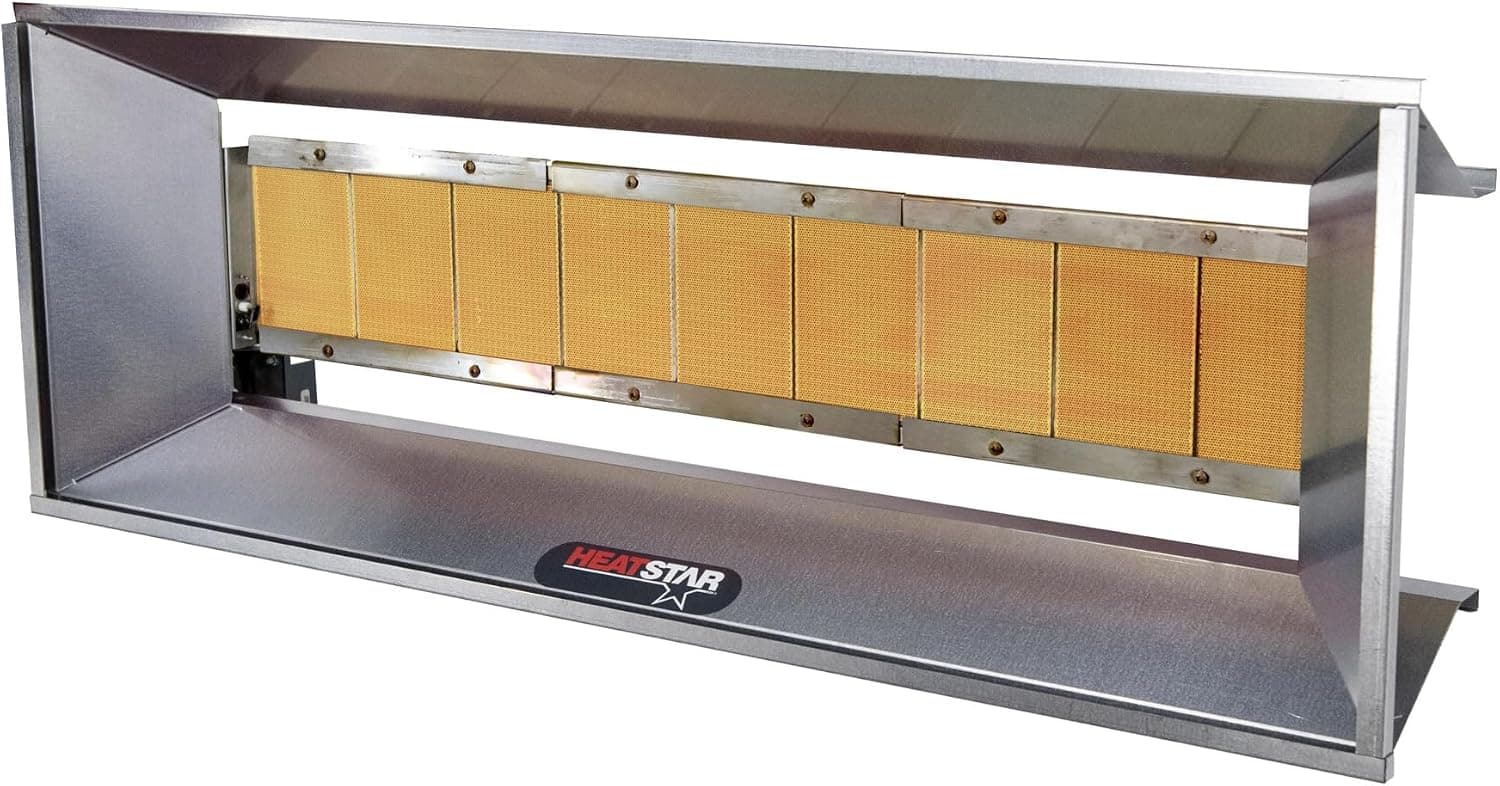
Mr. Heater's Model 8060 LA-5 overhead infrared propane heater rated at 60,000 BTU for large garages and shops.
Price range: See on Amazon
What we liked
- + 60,000 BTU output heats large workshops quickly
- + Overhead infrared warms people and surfaces directly
- + Mr. Heater is a leading garage heater brand
Trade-offs
- - Propane heaters require proper ventilation and clearance
- - Professional installation is recommended
Overview
This Mr. Heater unit is an overhead infrared heater in the 8000 series, fueled by liquid propane and rated to run at 60,000 BTU per hour out of the box, with a conversion kit included that steps it down to 50,000 BTU if a lower output is preferred for a smaller space. Rather than heating the air in a room the way a forced-air furnace does, infrared radiant heat warms people, tools and surfaces directly, which is why this style of heater is common in loading docks, warehouses and shop floors where doors open and close often and heated air would otherwise escape quickly through those openings.
Ignition and power
It uses power pile ignition, a manual pilot-light-based system that generates its own small electrical current, so the heater does not require a household electrical connection to operate, unlike heaters that rely on a spark igniter or a blower fan for combustion air. That makes it suited to garages or outbuildings without convenient electrical access near the mounting point, as long as a propane line or tank connection is available nearby. The unit ships with a thermostat for controlling output rather than running at full BTU continuously regardless of the temperature in the space.
Mounting and clearance
The manufacturer specifies a recommended mounting height of roughly 13 to 15 feet, which reflects how the heat spreads and its intensity at ground level, along with clearance distances to combustible materials on the top, sides, back and below the unit itself. Those clearance figures matter because this is a genuinely powerful radiant heater, and getting the mounting height and surrounding clearances wrong creates a real fire risk, which is why the site's own cons flag that professional installation is the safer route for a permanent overhead mount in a working garage.
Ventilation and coverage
As an unvented heater, it does not require ducting or a direct exhaust vent to operate, which simplifies installation compared to a vented gas furnace, though the space it heats still needs adequate fresh air exchange, consistent with any fuel-burning appliance operating indoors. At 60,000 BTU it is sized for larger detached garages, workshops or barns rather than a small single-car bay, where a lower-output heater would likely be more appropriate, easier to manage safely, and less costly to run continuously. A larger single-car garage with the door opened regularly for air exchange during use is generally fine, but a small, tightly sealed bay should either add ventilation or step down to the included 50,000 BTU setting rather than run the heater at full output in a confined space.
Who it's for
This heater fits a larger workshop or detached garage that needs serious heat output and where a qualified installer can handle the propane connection, mounting height and clearance requirements correctly from the start. It is not a plug-and-play space heater for a small attached garage bay; the combination of propane fuel, overhead mounting and high BTU output means it rewards careful, professional setup rather than casual DIY installation over a weekend. Homeowners comfortable working with propane lines and confirming clearance distances themselves can install it, but given the fire risk of an incorrectly mounted radiant heater, paying an installer for a one-time setup is the safer route for most garage owners.
Frequently asked questions
What is the BTU output?
It runs at 60,000 BTU per hour out of the box, with an included kit that can convert it down to 50,000 BTU.
Does it need electricity to run?
No, it uses power pile ignition, which generates its own small current, so it does not need a household electrical connection.
Does it need to be vented?
The manufacturer states no direct venting is required, though the space it heats still needs adequate fresh air exchange.
Can I install it myself?
It can be self-installed by someone comfortable with propane and mounting height and clearance requirements, but the site recommends professional installation for safety.
Prices change often, so check the current price and availability on Amazon.
Check price on AmazonGarage Setup Hub may earn a commission from the link above.