Bench Vise 6 in, Forged Steel Construction, Built-in Pipe Jaw and Swivel Base Review (2026)
Updated September 14, 2026 · Research-based review
Our verdict
For a garage owner doing welding, metalwork or plumbing repairs who needs to grip larger stock, the 6 inch jaw width and forged steel body of this vise give real clamping capacity. The trade-off is that its size and weight are unnecessary for light hobby work, and it needs a sturdy bench to bolt to before it earns its keep.
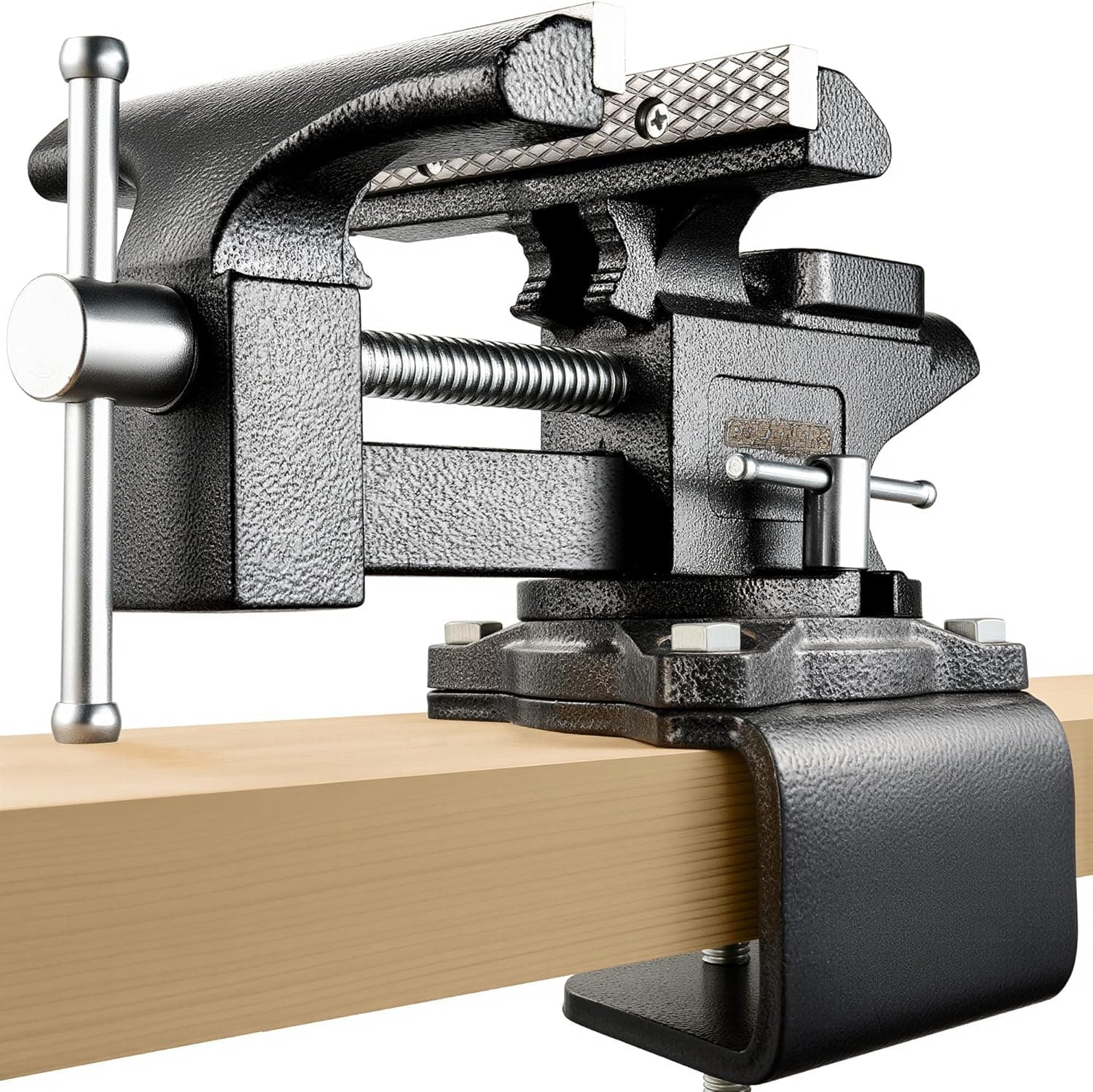
A 6 in forged steel bench vise with built-in pipe jaw and swivel base, suited to heavier repair and fabrication work.
Price range: See on Amazon
What we liked
- + 6 in jaw width holds larger parts steady for cutting and welding
- + Pipe jaw lets you grip conduit and tubing securely
- + Forged steel stays rigid when you apply serious torque
Trade-offs
- - Heavy vise is overkill for light crafts or small woodworking
- - Needs strong bolts and a solid bench top to mount properly
Who needs a 6 inch garage vise
A 6 inch bench vise is built for work that goes beyond light hobby crafts. If you are doing automotive repair, welding prep, metal fabrication, or plumbing work that involves gripping pipe and conduit, the larger jaw width gives you more surface area and more clamping force than the smaller vises common in craft or jewelry setups. It is a reasonable pick for a dedicated garage workshop where the vise stays bolted in one spot rather than a light-use bench that also serves other purposes. If your projects rarely go beyond small wood clamping or occasional light repairs, a smaller and lighter vise, including the 4.5 inch version covered elsewhere in this guide, is likely a better fit and easier to mount.
Jaw, base and steel construction explained
This model is built from forged steel with a 6 inch jaw width, which the listing describes as suited to heavier repair and fabrication work compared to smaller consumer vises. It includes a built-in pipe jaw section below the main flat jaws, letting it grip round stock such as conduit and tubing in addition to standard flat material. A swivel base lets you rotate the whole vise body to a new working angle without having to loosen and reposition the workpiece itself, which is useful when you are cutting, filing, or working around an awkward shape. Forged steel construction is generally chosen over cast iron in vises meant for serious torque because it resists cracking under heavy clamping pressure better than cast alternatives.
Mounting and everyday use
Because of its size and the forces it can generate, this vise needs to be bolted to a solid bench top rather than clamped temporarily. Use bolts rated for the clamping pressure the vise can apply, and check that the bench itself will not flex or lift under heavy torque. In daily use, the flat jaws handle general clamping while the pipe jaw section is there specifically for round stock like tubing or conduit. As with any vise, follow the manufacturer's mounting and use instructions rather than improvising a mounting method, since a poorly secured vise is a safety risk under load.
How it compares to other garage vises in the guide
In this guide's ranking of garage vises, this model sits at rank 3 of 8 with a score of 8.6. It scores just behind a 4.5 inch multi-jaw vise with a built-in anvil, and it is closely matched with a near-identical 6 inch model from a different listing at the same score. It outranks the 4.5 inch forged steel vise also reviewed in this guide, reflecting the extra jaw width and capacity this model offers over the smaller size, as well as a magnetic-pad 4.5 inch option and a WORKPRO 4.5 inch combination vise.
Verdict and who should size down
This is a strong pick if your garage work genuinely calls for a larger clamping surface, such as welding, automotive fabrication or plumbing repairs involving pipe. Our score of 8.6 out of 10 reflects solid build quality and fit for heavier jobs. If your garage is smaller or your projects lean toward light woodworking, crafts or occasional repairs, the 4.5 inch version in this same guide will take up less bench space, mount more easily, and cost less while still covering most home tasks. Weigh how often you actually clamp large stock before committing bench space to the bigger vise, since the extra jaw width is only useful if your projects regularly call for it.
Frequently asked questions
What does the built-in pipe jaw do?
It gives the vise a curved lower jaw section designed to grip round stock like pipe and conduit securely, in addition to the flat upper jaws used for standard clamping.
Can this vise be mounted on any workbench?
It should be bolted to a solid, sturdy bench top, using bolts rated for the clamping forces the vise can generate and following the manufacturer's mounting instructions.
How does the swivel base help?
A swivel base lets you rotate the vise body to a new angle without loosening and repositioning the workpiece itself, which speeds up repetitive cutting or filing tasks.
Is 6 inches overkill for a home garage?
It depends on the work. For welding, automotive fabrication or plumbing a 6 inch jaw is useful, but light crafts or small woodworking are usually served well by a smaller 4.5 inch vise.
Prices change often, so check the current price and availability on Amazon.
Check price on AmazonGarage Setup Hub may earn a commission from the link above.