6-Inch Bench Vise, Forged Steel Construction, Built-in Pipe Jaw and Swivel Base Review (2026)
Updated September 14, 2026 · Research-based review
Our verdict
A 6 inch forged steel bench vise built for real metalwork, not light hobby use. The wide jaws, built in pipe jaw, and up to 2200 pounds of clamping force suit garage mechanics, but it needs a thick, well anchored bench and more space than a compact vise.
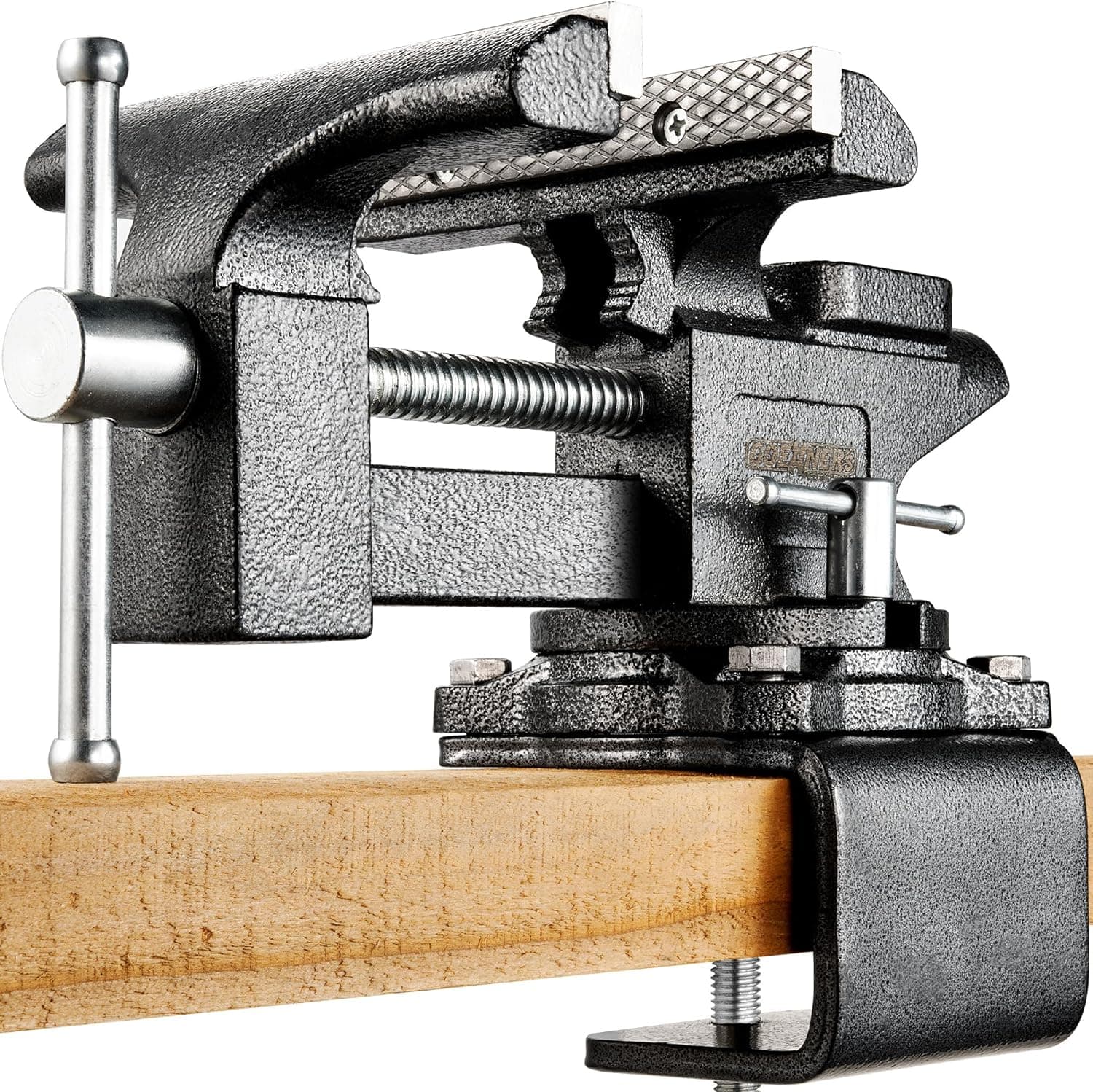
A 6-Inch forged steel bench vise with built-in pipe jaw and swivel base, a larger vise for heavier garage and metal work.
Price range: See on Amazon
What we liked
- + 6-Inch jaws clamp wider stock than typical home bench vises
- + Forged steel construction handles heavy force and hammering
- + Pipe jaw adds grip on round tubing and pipe fittings
Trade-offs
- - Large vise is heavy and needs a thick, well-built bench
- - Takes more bench space than compact vises
Who this vise is built for
This is a step up from the small vises bundled with starter tool kits. The 6 inch jaw width and 4.3 inch maximum opening let it grip wider stock, thick angle iron, and larger fittings than a 4.5 inch home vise can manage, which matters once you move from small repairs into welding fixtures, engine work, or fabricating brackets. The forged and hammered jaw material is built to survive hammering and heavy leverage rather than just holding a board steady for sanding. Anyone setting up a serious home garage, a side hustle repair bench, or a shared shop space benefits from the extra capacity. If your projects are mostly light woodworking or occasional picture frame clamping, this vise is more size and weight than you actually need.
What the specs actually mean
The listing lists a 6 inch jaw width, a 4.3 inch maximum jaw opening, and a 2 inch throat depth, with a small 3.1 by 2.9 inch anvil built into the rear of the body for light hammering. The manufacturer cites a clamping force of up to 2200 pounds, achieved through the forged steel jaw and body rather than cast iron, so the vise resists cracking under repeated impact better than a lower cost cast vise of the same size. A built in pipe jaw sits below the main flat jaws and grips round stock like tubing and pipe fittings without the pipe rolling out, useful for plumbing and metal fabrication work. The base swivels 270 degrees and locks with dual lock down nuts, so you can rotate the workpiece toward you instead of walking around the bench.
Setting it up and keeping it working
Mounting is straightforward: four bolts come with the vise to bolt it through the swivel base into a bench top, and the removable design means you can pull it off and remount it on a different bench if you move shops. Because the vise is heavier and clamps harder than a small utility vise, it needs a genuinely solid workbench top, since thin particleboard or a flimsy folding table will flex under real clamping force and undo the benefit of the extra jaw width. Day to day care is minimal: keep the jaw teeth and pipe jaw free of metal filings so they keep biting cleanly, and add a light coat of oil to the swivel mechanism and screw if it starts to feel stiff. Because it is forged steel rather than painted cast iron, surface rust is the main long term risk if it lives in an unheated, humid garage, so a light wipe down after wet weather work helps.
How it compares with other garage vises
Among vises aimed at home garages, this model sits in the middle of the pack for size. The heavy duty 4-1/2 inch multi jaw vise with an anvil scores slightly higher in this guide and offers a similar forged build in a smaller, lighter package that suits benches with less room to spare. The WORKPRO 4-1/2 inch bench vise, by contrast, uses gray iron rather than forged steel and trades some clamping strength for a lower weight and price, which fits lighter duty home use better than heavy hammering or fabrication. Choosing between them mostly comes down to how much bench space you have and how hard you plan to hit the vise: the 6 inch forged model reviewed here is the one to pick if you regularly work with wider stock or expect to use the anvil and pipe jaw often.
Verdict and who should look elsewhere
For a home garage that doubles as a light metal shop, this 6 inch forged vise gives more clamping capacity and a wider jaw than most bundled or entry level vises, and the built in pipe jaw adds real versatility for plumbing and round stock work. The trade off is size: it needs a thick, properly anchored workbench and takes up more space than a compact vise, so it is not the right pick for a small apartment workshop or a bench that already handles light hobby tasks. Buyers doing mostly woodworking, picture framing, or small electronics work will be better served by a smaller 4 to 4.5 inch vise that is easier to fit on a crowded bench. For anyone regularly hammering, bending, or clamping thicker material, the extra size and forged construction here are worth the bench space.
Frequently asked questions
Can this vise be removed from the bench after mounting?
Yes, the base is designed to be bolted down with four mounting bolts and can be unbolted and remounted on a different bench, since it is not a permanently fixed unit.
Does it include a pipe jaw for round stock?
Yes, a pipe jaw is built into the lower section of the jaws specifically for gripping tubing and pipe fittings without them rolling.
How far does the base rotate?
The swivel base rotates 270 degrees and locks with dual lock down nuts so the workpiece can be angled toward the user.
Is this vise suitable for heavy hammering and metalwork?
The forged steel jaw and body are built to handle hammering and heavy clamping loads, with a rated clamping force up to 2200 pounds, though it still needs a solid, well anchored bench underneath it.
Prices change often, so check the current price and availability on Amazon.
Check price on AmazonGarage Setup Hub may earn a commission from the link above.