WORKPRO Bench Vise 4-1/2 in, Utility Combination Pipe Home Vise, Swivel Base for Woodworking Review (2026)
Updated September 14, 2026 · Research-based review
Our verdict
WORKPRO's 4-1/2 inch bench vise is a lighter, more affordable option built from gray iron rather than forged steel. It suits home woodworking, light repairs, and general DIY, but it is not meant for the heavy hammering or metalworking that a forged steel vise can take.
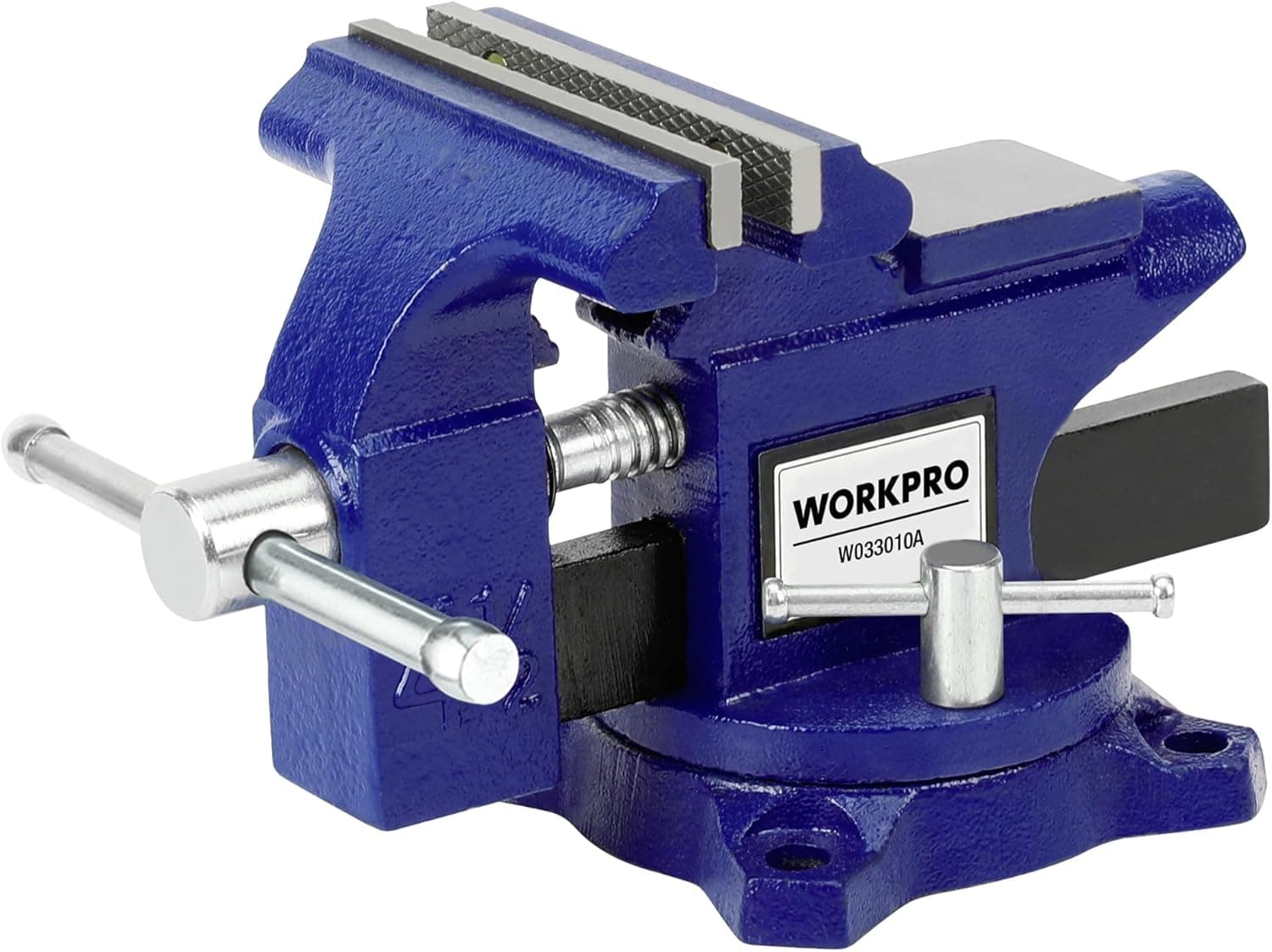
WORKPRO's 4-1/2 in utility combination pipe vise with swivel base, an affordable bench vise for home woodworking and repairs.
Price range: See on Amazon
What we liked
- + Combination jaws hold both flat boards and round pipe
- + WORKPRO brand is known for good-value home tool kits
- + Swivel base helps angle work for sawing or filing
Trade-offs
- - Utility-grade vise is not meant for heavy metalworking
- - Check the jaw width fits your typical workpieces
Who this vise fits
This vise fits home woodworking, general repairs, and light DIY projects where a bench needs a reliable way to hold a board or a small part steady rather than withstand heavy hammering or industrial use. The 4.5 inch jaw width is a common size for a first bench vise, large enough for most household tasks like sawing, filing, sanding, and small assembly work, without taking up as much bench space or costing as much as a larger forged steel vise. It suits someone setting up a first home workshop or garage bench on a budget more than a metalworker who needs to clamp thick stock or hammer directly on the vise body regularly.
What the design and specs mean in practice
The vise combines flat jaws for boards and material with a built in pipe jaw section for round stock like tubing, so a single vise handles both flat and round work without swapping jaw inserts. It is cast from gray iron rather than forged steel, a common and cost effective choice for utility grade vises, rated for up to 2204 pounds of clamping force with a 3.75 inch maximum jaw opening and a 2-11/32 inch throat depth. The base swivels 240 degrees and locks in place, letting the workpiece rotate toward whichever angle suits the current cut or clamp without repositioning the whole vise on the bench. WORKPRO markets it specifically for woodworking use rather than heavy metal fabrication.
Setup, daily use, and care
Setup is simple bolt down mounting to a bench top, and because the vise is lighter than a forged steel model of similar jaw size, a moderately sturdy workbench is usually enough to keep it stable during normal use, without needing the extra reinforced bench that heavier vises require. Day to day, keeping the jaw faces and pipe jaw clear of sawdust and metal filings helps it grip consistently, and an occasional drop of oil on the swivel mechanism and main screw keeps the action smooth. Because gray iron is more brittle than forged steel, repeated hard hammering directly on the vise body or jaws is the main thing to avoid, since it is not built to absorb that kind of impact the way a forged vise can.
Gray iron versus forged steel vises
Within this guide, the forged steel 6 inch vise and the heavy duty 4.5 inch multi jaw vise both score noticeably higher, largely because forged steel construction handles harder use and heavier clamping loads than gray iron over time. Those options need more bench space or a higher spend for the added capability, which is exactly the trade this WORKPRO vise is built around: a lighter, easier to mount vise in exchange for less headroom on heavy metalwork. For anyone whose projects stay in the woodworking and light repair range this guide describes, the practical difference in daily use is smaller than the score gap suggests, since the extra capacity of the forged models mostly matters for harder metalworking tasks.
Verdict and who should look elsewhere
For a home workshop focused on woodworking, general repairs, and light DIY rather than heavy metal fabrication, this WORKPRO vise offers a sensible jaw size and a genuine pipe jaw at a lighter weight than the forged steel options in this guide. It is the wrong choice for anyone planning to hammer directly on the vise regularly or clamp thick stock under high force, where gray iron is more likely to crack over time than forged steel. Buyers who are unsure how heavy their future projects will get may prefer to size up to a forged steel vise from the start rather than upgrade later.
Frequently asked questions
What is this vise made from?
It is cast from gray iron, a common material for utility grade bench vises, rather than forged steel.
How far does the base swivel?
The base swivels 240 degrees and locks in place so the workpiece can be angled without repositioning the vise.
Can it grip round stock like pipe?
Yes, it includes a built in pipe jaw section alongside the flat jaws for round tubing and pipe work.
Is it suitable for heavy metalworking?
It is built more for woodworking and light repair use, and gray iron construction is not meant to take the same heavy hammering and clamping loads as a forged steel vise.
Prices change often, so check the current price and availability on Amazon.
Check price on AmazonGarage Setup Hub may earn a commission from the link above.