Garage Floor Options Compared
Published How we research
Epoxy coatings are the popular premium option, bonding to concrete for a hard, glossy, chemical-resistant surface but needing careful prep and days of cure time. Polyaspartic and polyurea coatings cure much faster and handle temperature swings better, though DIY application is trickier. Interlocking tiles snap together with no adhesive or cure time, ideal for DIYers. Roll-out vinyl mats are the simplest, cheapest upgrade, good for renters. Concrete sealers and stains sit at the budget end, offering less impact resistance. Choose based on budget, tolerable downtime, and how you use the space. Your garage floor takes more abuse than any surface in your home. It endures hot tires, dropped tools, oil drips, road salt, and constant foot traffic, all while looking like an afterthought in most houses. Upgrading the floor is one of the highest-impact improvements you can make, both for looks and for durability. The challenge is choosing among the many options, each with its own strengths, costs, and installation demands.
Products from this article
The highest-scoring picks from the buying guides this article links to. Scores are our editorial assessment, not customer ratings.
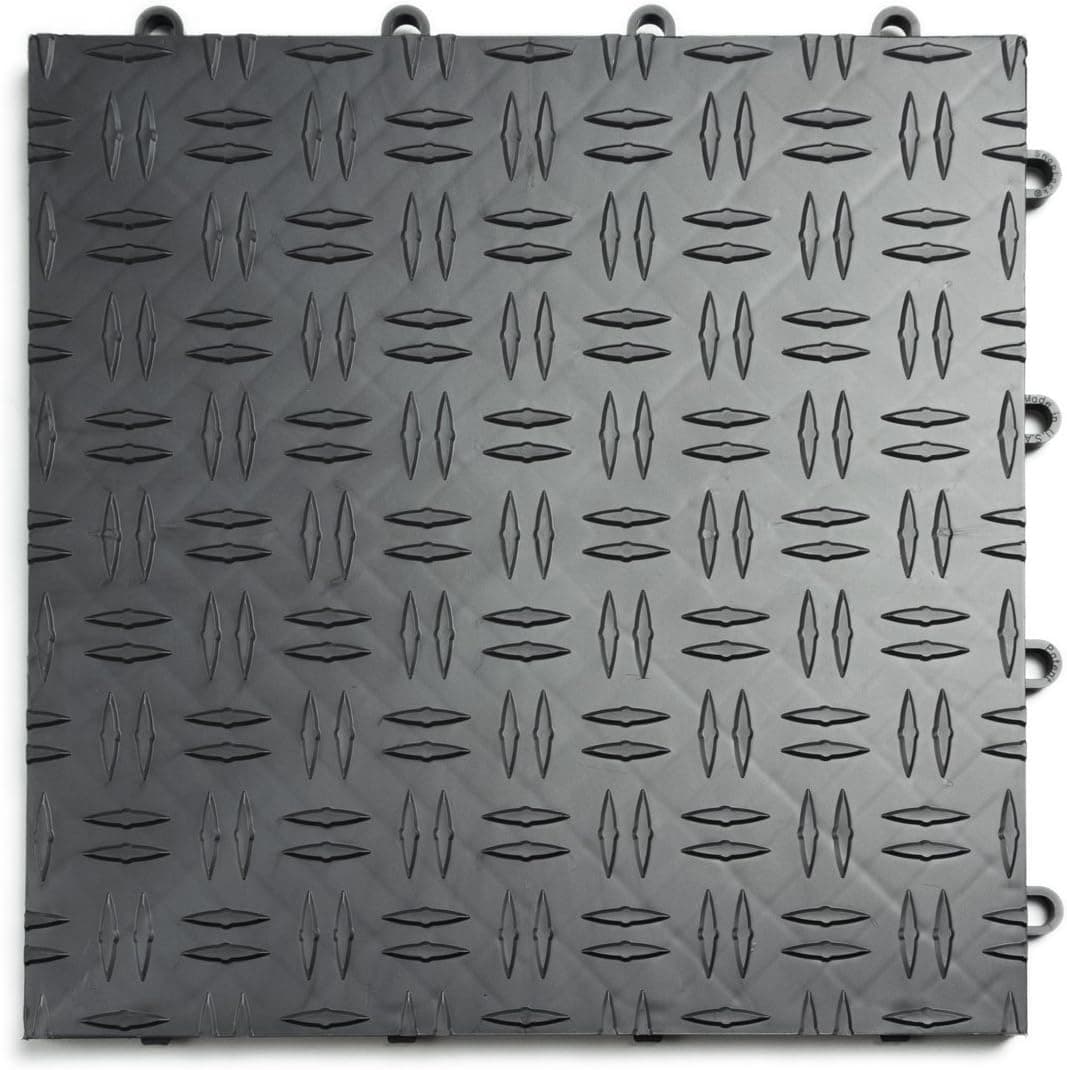
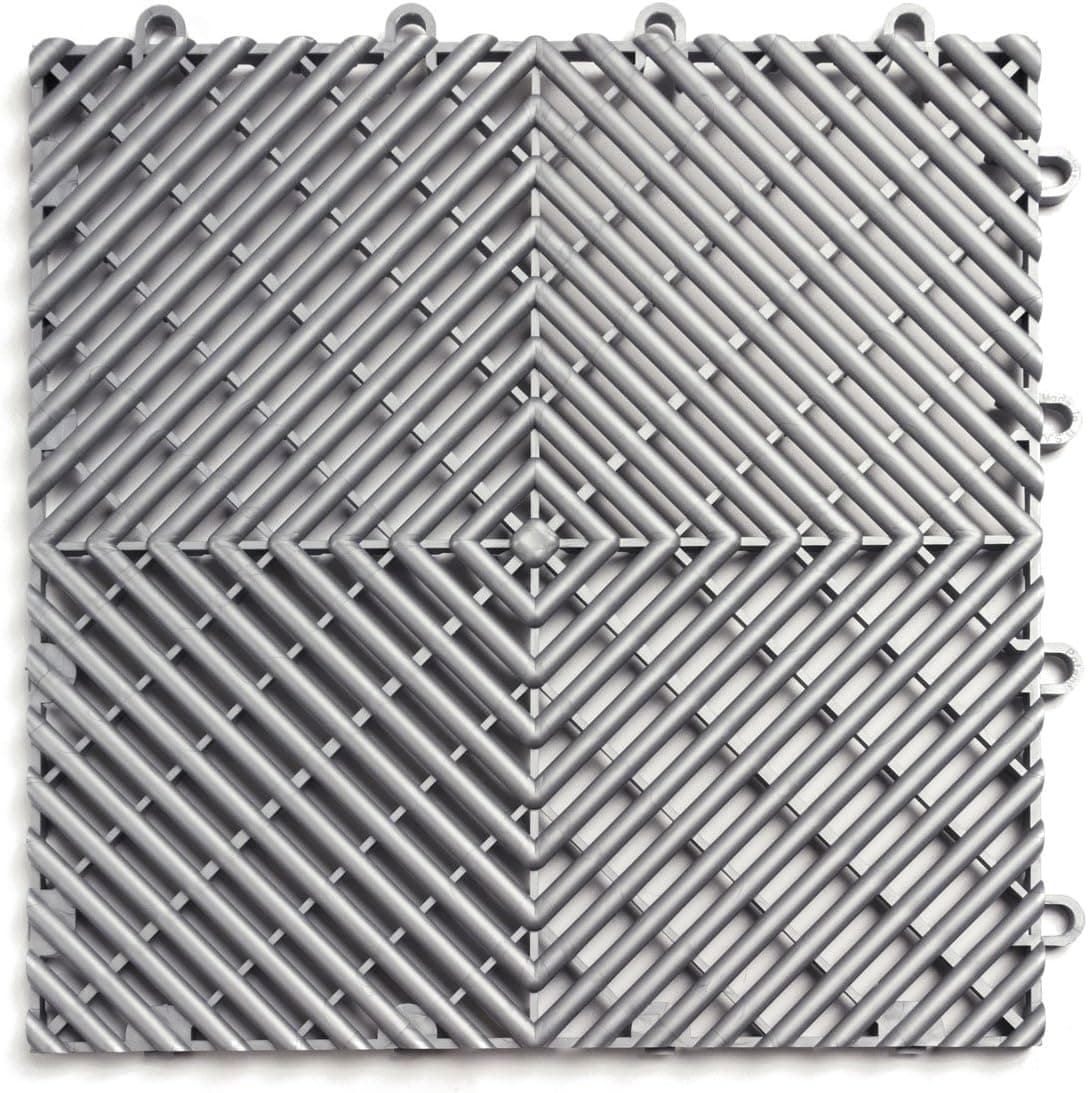
+ Diamond pattern gives a non-slip, classic garage look
From our guide: Best Garage Floor Tiles
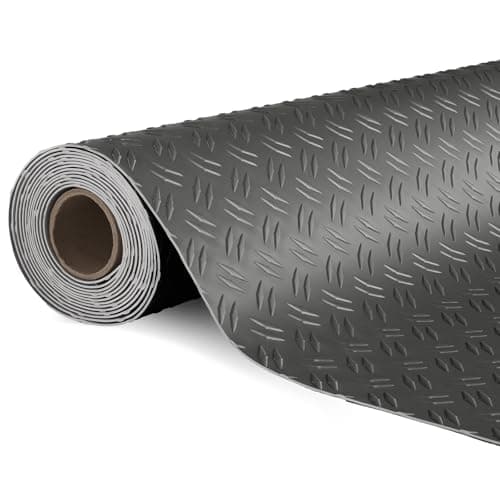
+ Same TUFFIOM 7.5 x 17 ft size, giving about 128 sq ft of roll-out coverage
From our guide: Best Garage Floor Mats
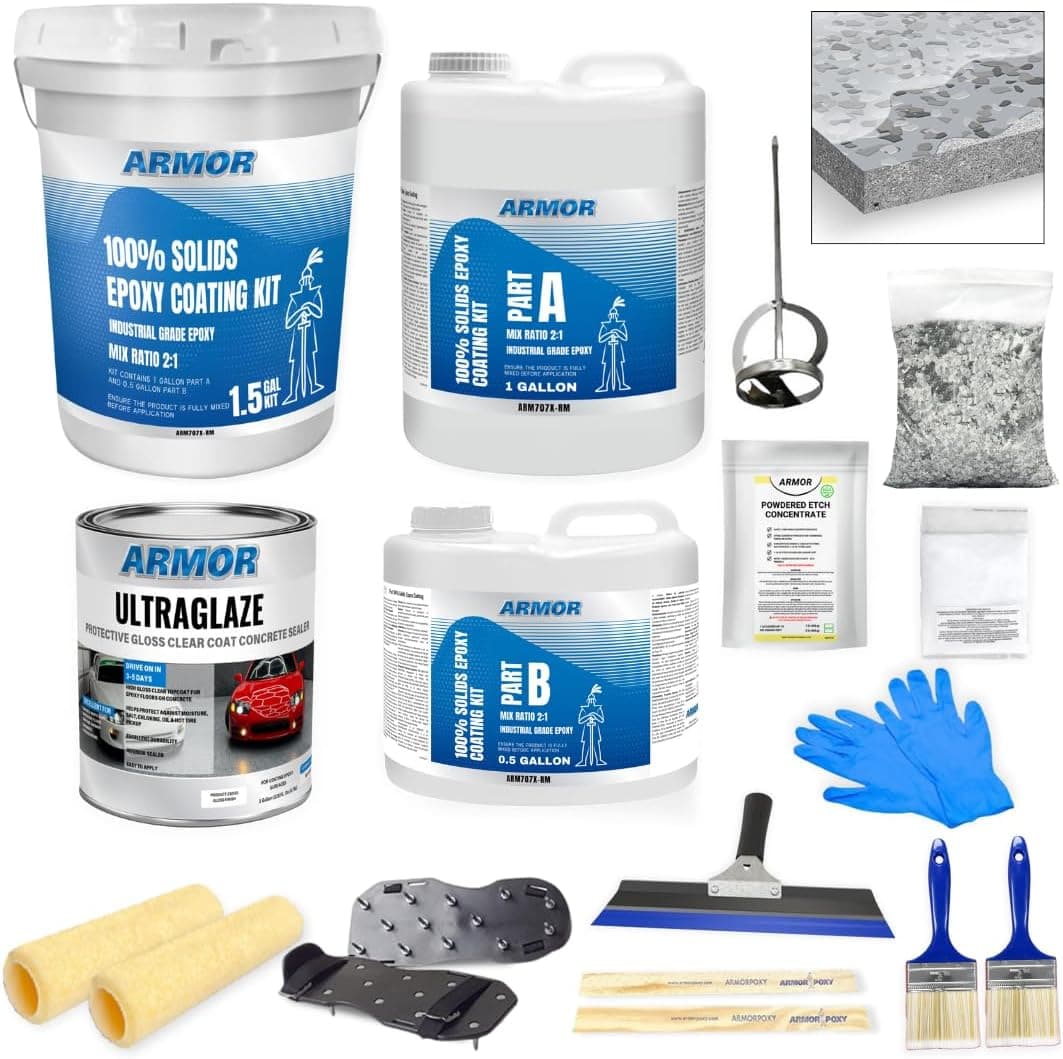
+ 100% solids epoxy builds a much thicker, tougher coat
From our guide: Best Epoxy Floor Coating
+ Alloy finish gives a sleek metallic showroom look
From our guide: Best Garage Floor Tiles
Epoxy coatings: the popular premium option
Epoxy coatings are the most popular premium option and for good reason. Epoxy bonds to the concrete to create a hard, glossy, chemical-resistant surface that resists stains and cleans up easily. It comes in solid colors and decorative chip blends. The tradeoff is preparation and cure time. The concrete must be clean, dry, and properly etched or ground, and the floor needs to cure for several days before you can park on it. Done right, it lasts for years, but a rushed prep job is the most common cause of peeling.
Polyaspartic and polyurea: faster and tougher
Polyaspartic and polyurea coatings are a step up in performance and price. They cure much faster than traditional epoxy, often allowing you to use the garage again within a day, and they handle temperature swings and UV exposure better. Many professional garage floor installers now use a polyaspartic topcoat over an epoxy base for the best of both. The downside is that the fast cure time makes DIY application trickier, so many homeowners hire a pro.
Interlocking tiles: easiest for a determined DIYer
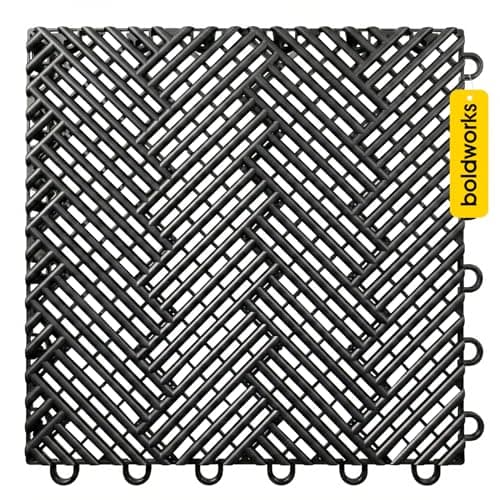
Interlocking floor tiles are the easiest option for a determined DIYer who wants to avoid coatings entirely. Rigid plastic tiles snap together over your existing concrete with no adhesive, no fumes, and no cure time. They hide minor cracks and imperfections, allow moisture to escape underneath, and can be lifted individually if one gets damaged. They cost more per square foot than a coating and can shift under heavy point loads, but the instant, mess-free installation wins a lot of fans.
Roll-out mats: the simplest, cheapest upgrade
Roll-out floor mats are the simplest and most affordable upgrade of all. You unroll a heavy vinyl mat across the floor, and you are done. Mats protect the concrete, catch drips, and add a bit of cushion, and you can pull them up and hose them off. They are ideal for renters or anyone who wants a quick refresh without commitment. The tradeoff is that they can trap moisture underneath and are not as seamless or permanent as a coating.
Concrete sealers and stains sit at the budget end
Concrete sealers and stains sit at the budget end. A penetrating sealer soaks in to protect against moisture and stains while keeping the natural concrete look, and an acid or water-based stain adds color. This is the least expensive way to protect a floor, though it offers less impact resistance and shine than a full coating.
How to choose between them
To choose, weigh your budget, how much prep and downtime you can tolerate, and how you use the space. For a durable, showroom look and long-term value, a coating system is hard to beat. For speed and simplicity, tiles or mats get you there in an afternoon.
Frequently asked questions
What is the best garage floor coating for durability? Epoxy coatings create a hard, glossy, chemical-resistant surface that lasts for years when properly prepared, though a rushed prep job is the most common cause of peeling.
What is the fastest garage floor coating to install? Polyaspartic and polyurea coatings cure much faster than traditional epoxy, often letting you use the garage again within a day.
What is the easiest garage flooring for a renter to install? Roll-out vinyl mats or interlocking floor tiles, since both require no adhesive or cure time and can be removed without damaging the concrete underneath.
Do interlocking garage floor tiles hide cracks in concrete? Yes, they hide minor cracks and imperfections and allow moisture to escape underneath, though they can shift slightly under heavy point loads.
Quick answers
What is the best garage flooring?
Epoxy gives a sealed, easy-clean surface on sound concrete. Interlocking tiles are faster, removable and hide cracks. Rubber mats are simplest for parking spots and workbenches.
Popular right now
- Best Tool Hanging SystemsBuying guide
- Best PegboardsBuying guide
- Building a Mechanic's Tool Kit From ScratchArticle
- Best Heavy-Duty ShelvingBuying guide
- Best WorkbenchesBuying guide
- Epoxy vs Tile Garage FlooringArticle
Based on the last 28 days of search and visitor data.