Pegboard vs Slatwall
Published How we research
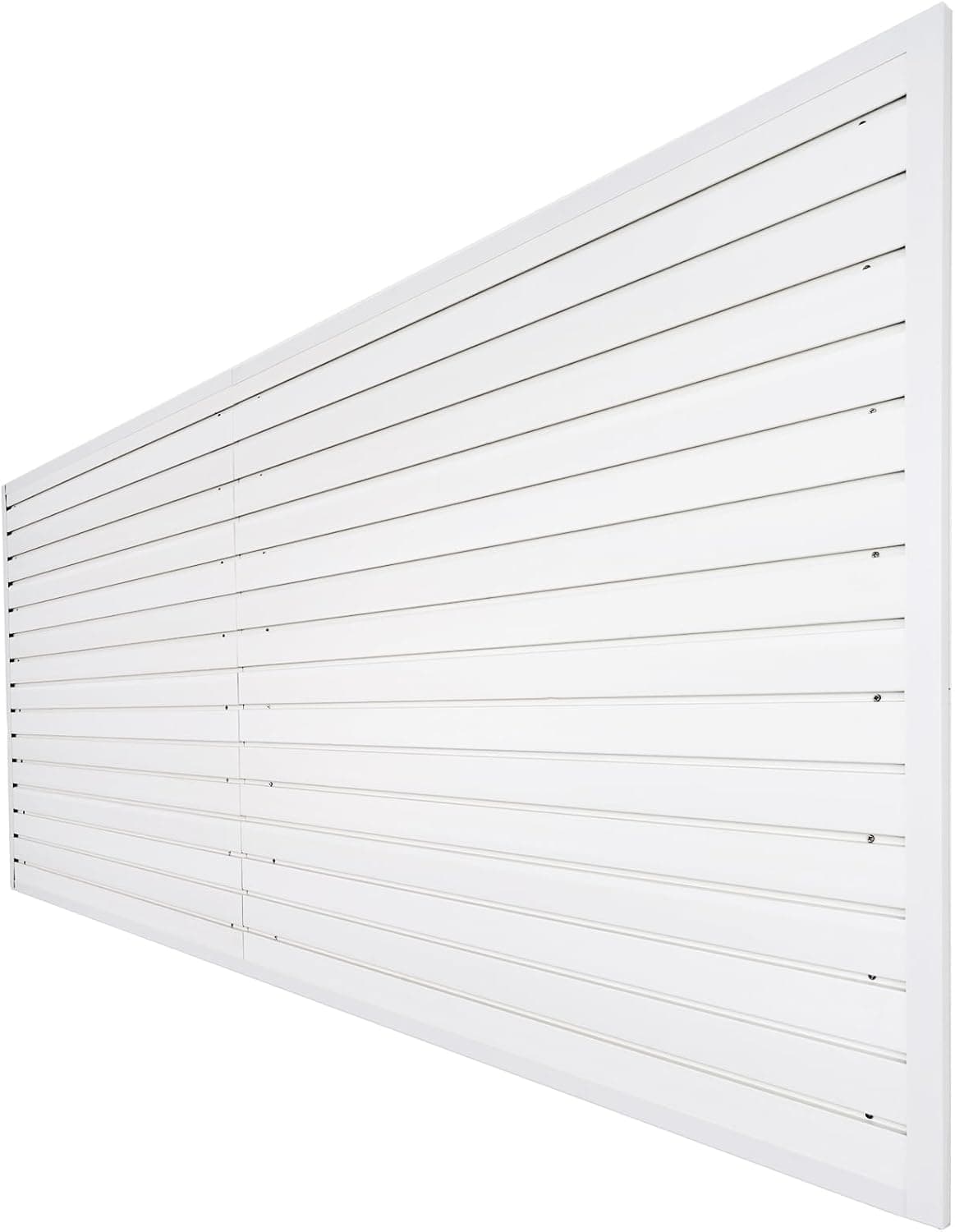
Pegboard is the affordable classic, a hole-punched panel that is cheap and easy to cut, but it can sag or let hooks pop out under heavier loads and needs furring strips to mount. Slatwall uses continuous horizontal grooves that carry weight more securely per hook, look more finished, but cost more and need to be screwed into studs. Choose pegboard for light hand tools on a budget, slatwall for heavier gear and a polished look, or combine both, pegboard above the bench and slatwall along the main storage wall. When it comes to organizing garage walls, two systems dominate the conversation: pegboard and slatwall. Both turn a bare wall into flexible, hook-based storage for tools and gear, but they differ in cost, strength, appearance, and how they install. Choosing between them comes down to how heavy your storage needs are and how much you want to invest. Here is an honest look at how they stack up.
Products from this article
The highest-scoring picks from the buying guides this article links to. Scores are our editorial assessment, not customer ratings.
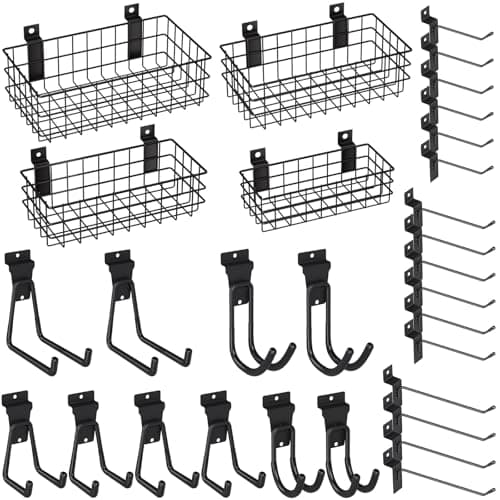
+ Four wire baskets plus 26 hooks of varying sizes covers hand tools, power tools and garden gear
From our guide: Best Slatwall Panels
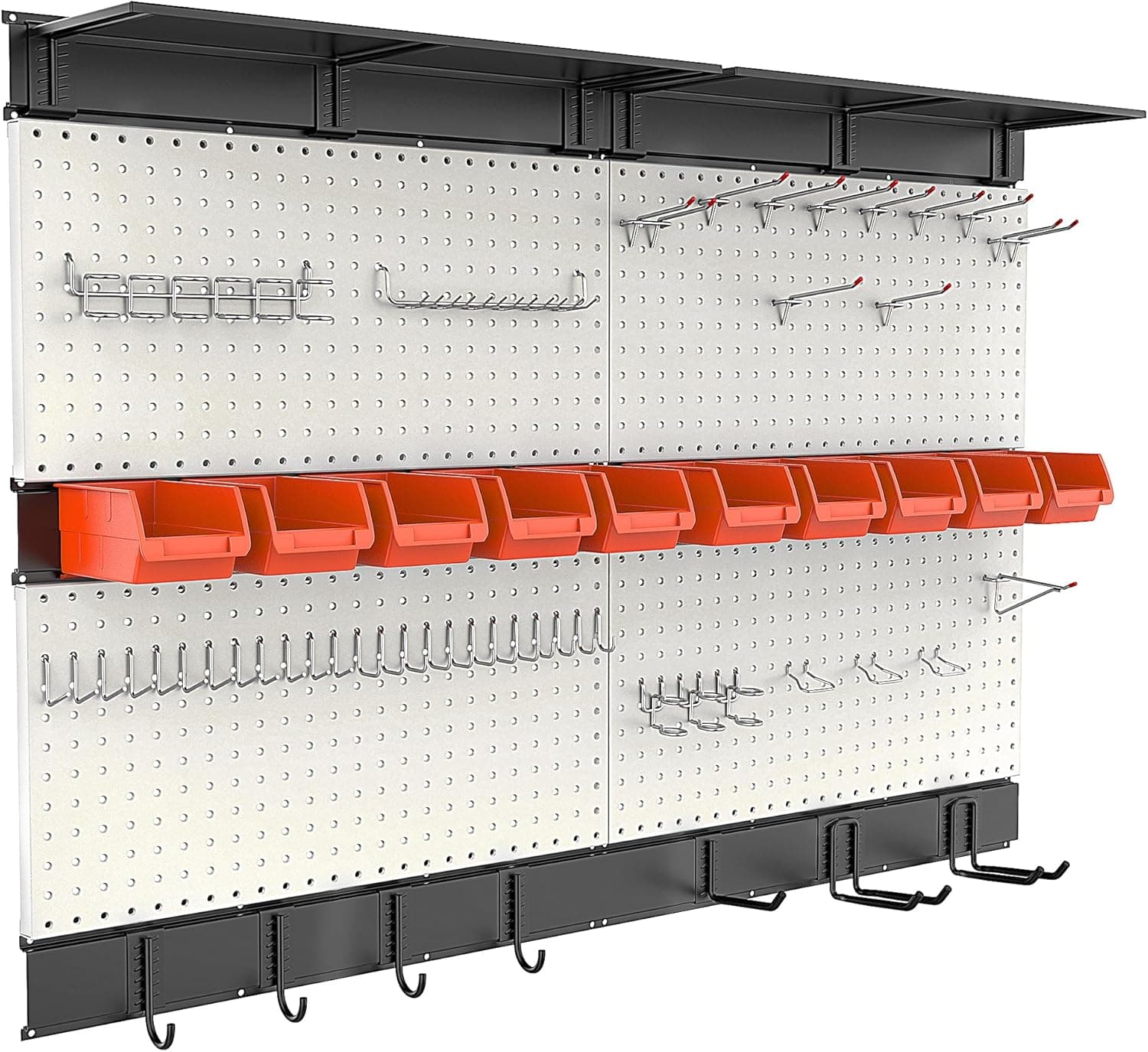
+ Complete 72pcs kit includes board, hooks and bins in one box
From our guide: Best Pegboards
+ 4x8 ft coverage creates a large hook-ready wall in one kit
From our guide: Best Slatwall Panels
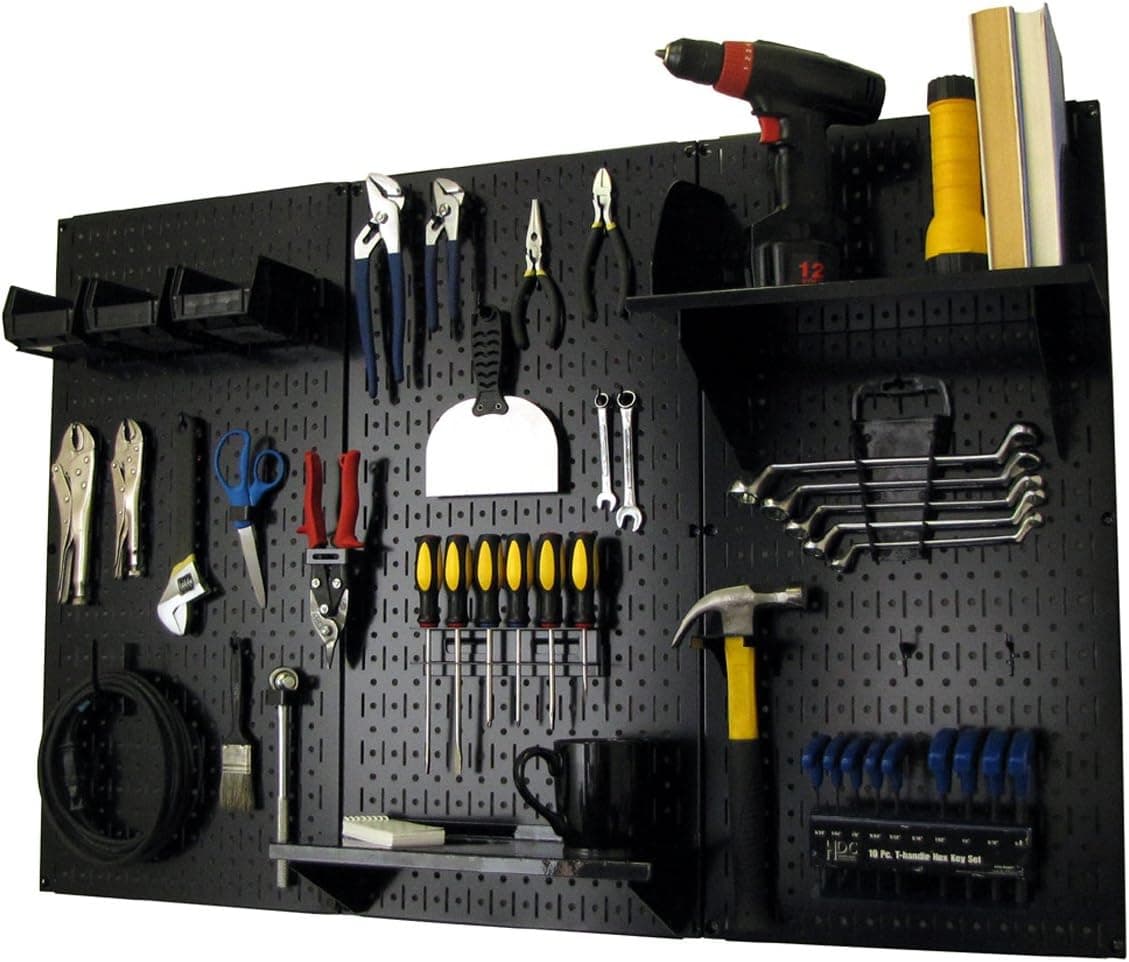
+ All-black look hides grime and suits modern garages
From our guide: Best Pegboards
Pegboard is the long-standing, affordable classic
Pegboard is the long-standing classic. It is a panel of hardboard or metal punched with a grid of evenly spaced holes, into which you insert hooks and accessories. Its biggest advantages are affordability and availability. Pegboard is inexpensive, sold at nearly every home center, and easy to cut to size with basic tools. For hanging hand tools, small parts bins, and lightweight gear, it does the job well and lets you rearrange hooks in seconds.
Where pegboard's limitations show up
The limitations of pegboard show up when the load gets heavy. Standard hardboard pegboard can sag, crack, or let hooks pop out if you overload it, and the hooks themselves sometimes lift out when you grab the tool hanging on them. Mounting also requires furring strips or a frame to hold the board off the wall so the hooks can seat properly. Metal pegboard solves much of the strength problem but costs more and narrows the price gap with slatwall.
Slatwall is the heavier-duty, modern option
Slatwall is the heavier-duty, more modern option. It consists of horizontal panels with continuous grooves that accept a wide range of hooks, baskets, shelves, and bins. Because the weight is carried along a continuous channel rather than a single hole, slatwall generally supports significantly more weight per hook and holds accessories more securely. It also looks cleaner and more finished, which appeals to homeowners who want their garage to feel like a showroom.
The tradeoffs for slatwall
The tradeoffs for slatwall are cost and installation. Slatwall panels and their accessories cost more than comparable pegboard setups, and the upfront investment can add up if you are covering a large wall. Installation is straightforward but the panels are heavier and must be screwed securely into studs to carry the loads they are designed for. Once up, though, slatwall is very durable and endlessly reconfigurable.
So which should you pick?
So which should you pick? If you are on a budget, storing mostly light hand tools, and want a quick, cheap solution, pegboard is a smart choice and easy to expand over time. If you want to hang heavier gear like power tools, bins full of hardware, or sports equipment, and you value a polished look and higher weight capacity, slatwall is worth the extra money. Many garages use both, with pegboard above a workbench for quick tool access and slatwall along the main storage wall for heavier items.
Frequently asked questions
Is pegboard or slatwall stronger for garage storage? Slatwall generally supports significantly more weight per hook because the load is carried along a continuous channel, while pegboard hooks can pop out or the board can sag under heavy loads.
Is pegboard cheaper than slatwall? Yes, pegboard is inexpensive, sold at nearly every home center, and easy to cut to size, while slatwall panels and accessories cost more, especially for a large wall.
Do I need studs to install slatwall? Yes. Slatwall panels are heavier and must be screwed securely into studs to carry the loads they are designed for.
Can I use both pegboard and slatwall in a garage? Yes, many garages combine both, with pegboard above a workbench for quick tool access and slatwall along the main storage wall for heavier items.
At a glance: Pegboard vs Slatwall
| Pegboard | Slatwall | |
|---|---|---|
| Load capacity | Light to moderate, metal is stronger | Moderate to heavy |
| Best for | Hand tools above a bench | Shelves, baskets, bikes, yard tools |
| Hooks | Can fall out when you grab a tool | Stay locked in the grooves |
| Look | Utility | Clean, finished |
| Install | Needs spacers off the wall | Screws to studs |
| Cost | Low | Higher |
Choose Pegboard if
- You want a budget tool wall over a workbench
- You mostly store small hand tools
- You like seeing every tool at a glance
Choose Slatwall if
- You store heavier or bulkier gear
- You want a finished look across a wall
- Hooks falling out annoys you
Bottom line: Pegboard is the best value for a workbench tool wall. Slatwall is worth the extra cost for full-wall storage that has to hold heavier gear.
Quick answers
Is slatwall stronger than pegboard?
Generally yes. Slatwall holds heavier items and hooks stay locked in the grooves. Metal pegboard is much stronger than hardboard and is a good budget option for hand tools.
Popular right now
- Best Tool Hanging SystemsBuying guide
- Best PegboardsBuying guide
- Building a Mechanic's Tool Kit From ScratchArticle
- Best Heavy-Duty ShelvingBuying guide
- Best WorkbenchesBuying guide
- Epoxy vs Tile Garage FlooringArticle
Based on the last 28 days of search and visitor data.