How to Mount Floating Shelves and Wall Shelves in a Garage
Published How we research
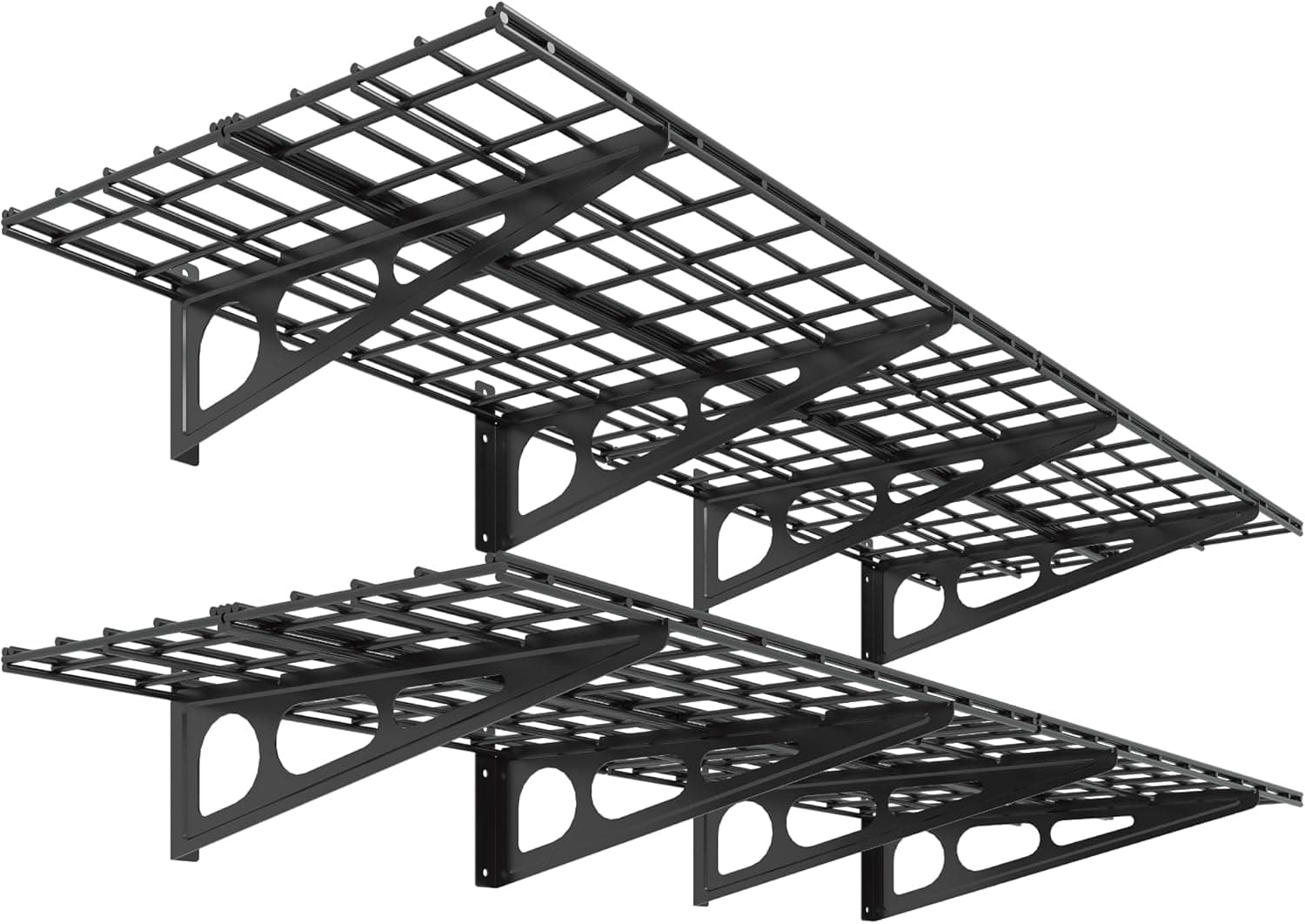
To mount a floating shelf or wall shelf, find the wall studs, mark a level line, drill pilot holes and fasten the bracket or cleat into at least two studs with screws long enough to reach well into the wood. Anchors in bare drywall are only for light loads, so anything heavier than a few pounds should go into framing or a masonry wall with the right fastener. The steps below cover a stud wall, a drywall-over-stud wall and a block or concrete wall, which are the three surfaces most garages have.
Products from this article
The highest-scoring picks from the buying guides this article links to. Scores are our editorial assessment, not customer ratings.
+ 1400lbs load capacity handles bins and heavy bulk items
From our guide: Best Garage Wall Shelves
+ 4000 lbs rating handles dense loads like tile, tools and full paint cans
From our guide: Best Heavy-Duty Shelving
+ Pine panels are light and easy to drill for custom holders
From our guide: Best French Cleat Systems
+ 1600 lbs load capacity is the highest stated in this group
From our guide: Best Garage Wall Shelves


Check what your wall is made of first
The fastener depends on the wall, so find out before you buy hardware. Knock along the wall: a hollow sound usually means drywall or panel over studs, a dull solid sound means block, brick or poured concrete. Many garages are unfinished, so you can see exposed studs, which is the easiest case. Attached garages often have drywall on the shared wall, and the rest of the garage may be bare framing, plywood or concrete block.
A stud finder helps on drywall, but confirm each hit by drilling a small test hole or tapping a thin nail where you expect framing. Studs are commonly spaced 16 inches apart center to center, and sometimes 24 inches, so once you find one you can measure to the next. Outlets and switches are usually fastened to a stud on one side, which gives another clue. Always check for wires and pipes before drilling near a switch, outlet or plumbing wall.
Pick the right shelf and hardware for the load
A true floating shelf hides a steel bracket or rod set inside a hollow shelf body. The shelf slides over the bracket, and the bracket takes all the load, so its length and the way it is fastened decide the capacity. Short brackets with two screws are fine for paint cans or a row of small bins. Heavy items such as tool storage totes, cans of fluid or a stack of power tool cases need a longer, thicker bracket anchored into several studs, or a different type of support.
Standard wall shelves with visible angle brackets carry more weight for the same price because the brackets sit under the shelf and spread the load. For heavy loads, steel garage wall shelves with built-in brackets are made for studs and handle far more than a decorative floating shelf. If you want a heavy shelf but a clean look, a French cleat, which is a 45 degree beveled strip mounted on the wall and a matching strip on the shelf, spreads the weight along the whole length. Match the load you plan to put on the shelf to the rating of the product and the fasteners, and keep in mind that a rating given for a stud wall does not apply to drywall anchors.
Mount into a stud wall step by step
Hold the shelf or bracket at the height you want and mark the top with a pencil. Use a 24 inch or longer level to draw a level line across the wall, and mark the stud centers along that line. Decide the height for how you will use the shelf: a shelf over a workbench should clear your head and leave room to reach, while a shelf over a utility sink or car parking spot needs to stay out of the way of doors and mirrors.
Hold the bracket against the line, mark the screw holes that land on studs, and drill pilot holes slightly smaller than the screw shank so the wood does not split. Most manufacturers supply screws, but if the supplied screws are short, use screws that go at least 1 1/2 inches into the stud, beyond the thickness of the drywall and the bracket. Drive the top screws partway first, check level, then finish the rest and tighten everything evenly. For a hidden-bracket floating shelf, slide the shelf on, push it back against the wall and fix it with the set screws or underside screws the maker specifies.
Mount into drywall, block or concrete
If a stud is not where you need the shelf, use a bracket long enough to reach two studs, or add a mounting board. Cut a 1 by 4 or 1 by 6 board, screw it to the studs, and fix the shelf to the board. This also lets you place the shelf at any spacing. Plain plastic expansion anchors in drywall suit only very light items such as a small display or a few lightweight bins. For more weight on hollow drywall, toggle or snap-style anchors rated for the load are the usual choice, but the safest approach for a garage is still to hit the studs.
On a block or poured concrete wall use a hammer drill with a masonry bit, and a concrete screw or sleeve anchor sized to the bracket hole. Drill the hole slightly deeper than the screw length and blow the dust out before driving the fastener. Block walls have hollow cores, so keep screws on the solid face shells or use anchors designed for hollow block. Wear safety glasses and a dust mask when drilling masonry.
Avoid the common mistakes
The most common failure is overloading a shelf beyond the real capacity of the fasteners. Put the heaviest items low and close to the wall, and spread the weight over the whole shelf instead of piling it at the front edge. Shelves also sag when the brackets are too far apart, so for long shelves add a middle support, which should land on a stud too.
Do not trust the label on the shelf when you are using other fasteners. A rating applies only when the product is installed as the maker specifies, in studs or the surface they name. Check the screws once after a week or two, because wood shrinks and seasonal temperature swings in an unconditioned garage can loosen fasteners slightly. If you need a lot of storage, a freestanding unit avoids drilling into walls at all.
Finally, think about moisture and temperature. Garages see humidity swings and cold nights, so bare steel brackets can rust in a damp space and unfinished particleboard shelves can swell. Painted or powder-coated brackets and sealed or solid wood shelves cope better.
Frequently asked questions
Can floating shelves hold heavy items in a garage? Decorative floating shelves are best for light to moderate loads. Heavy items belong on steel wall shelves, a cleat system anchored in studs, or freestanding heavy-duty shelving, and the load should never exceed the product rating.
How far apart should shelf brackets be? Many shelf makers suggest brackets about 16 to 24 inches apart for typical shelves, which fits common stud spacing. Heavier loads or thinner shelf boards need brackets closer together, so follow the maker's guidance.
Do I need a stud finder? It is the easiest tool for drywall, but you can also locate studs with a small finish nail or by measuring from a corner or outlet. Exposed framing in an unfinished garage needs no finder at all.
What screws should I use? Use the screws supplied with the shelf if they reach into the stud well, and otherwise screws or lag screws that go at least 1 1/2 inches into solid framing. Choose coated or galvanized screws if the garage is damp.
Popular right now
- Best Tool Hanging SystemsBuying guide
- Best PegboardsBuying guide
- Building a Mechanic's Tool Kit From ScratchArticle
- Best Heavy-Duty ShelvingBuying guide
- Best WorkbenchesBuying guide
- Epoxy vs Tile Garage FlooringArticle
Based on the last 28 days of search and visitor data.