How to Store Tires
Published How we research

Clean each tire before storage and let it dry fully, skipping dressings that can work against the rubber over time. Bag each tire individually in an airtight bag with the air squeezed out to limit oil evaporation and ozone exposure. Store them in a cool, dry, dark spot away from sunlight, temperature extremes, and ozone-generating equipment. Tires mounted on wheels are best hung or stacked flat; unmounted tires should stand upright and be rotated occasionally to avoid deforming. Label each tire's vehicle position before removal to make remounting easy. If you swap between summer and winter tires, or keep a spare set on hand, how you store them makes a real difference in how long they last. Tires are made of rubber compounds that degrade over time, and poor storage speeds that process through exposure to sunlight, heat, ozone, and moisture. A little care when you put them away pays off in safer, longer-lasting tires when you put them back on the road.
Products from this article
The highest-scoring picks from the buying guides this article links to. Scores are our editorial assessment, not customer ratings.
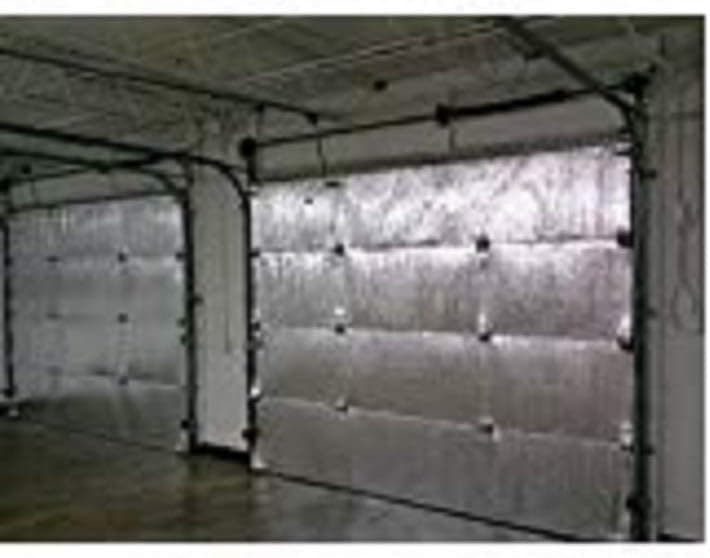
+ R Value 8.0 is clearly stated for comparing insulation
From our guide: Best Garage Door Insulation
+ 60,000 BTU output heats large workshops quickly
From our guide: Best Garage Heaters
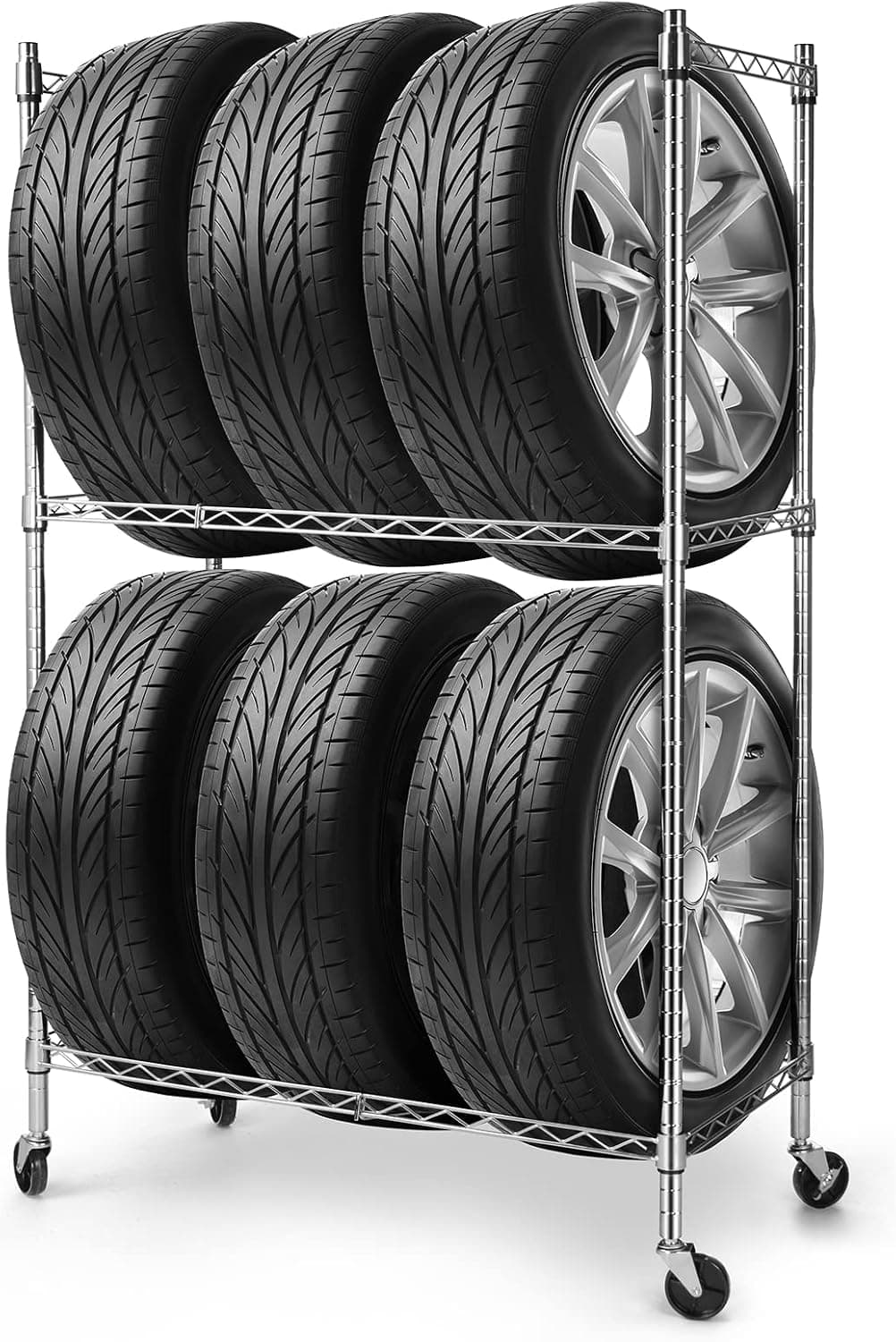
+ Holds 6 standard tires with rims on one rack
From our guide: Best Tire Storage Racks
+ Includes tape, cutter and squeegee for a complete install
From our guide: Best Garage Door Insulation


Clean each tire before storage
Start by cleaning each tire before storage. Wash off brake dust, road grime, and any embedded debris with soap and water, then let them dry completely. If the tires are still mounted on wheels, you can clean the rims too. Skip the tire dressings and protectants for storage, since many contain compounds that can actually work against the rubber over the long term. A clean, dry tire is all you want going into storage.
Bag each tire individually
Once dry, bag each tire individually. Sealing each tire in an airtight bag, such as a large opaque plastic bag with the air squeezed out, limits the evaporation of the oils in the rubber that keep it supple. Removing as much air as possible before sealing reduces exposure to ozone, which is a leading cause of premature cracking. Individual bags also keep the tires clean and make them easy to handle.
Where you store them matters as much as how
Where you store them matters just as much as how. The ideal spot is cool, dry, and dark, away from direct sunlight and out of temperature extremes. Avoid storing tires near electric motors, furnaces, or other equipment that generates ozone. A climate-controlled basement is often better than an uninsulated garage that bakes in summer and freezes in winter, but a shaded, dry corner of the garage works if that is what you have. Keep them off bare concrete when possible by setting them on a mat or rack.
Position depends on whether tires are mounted
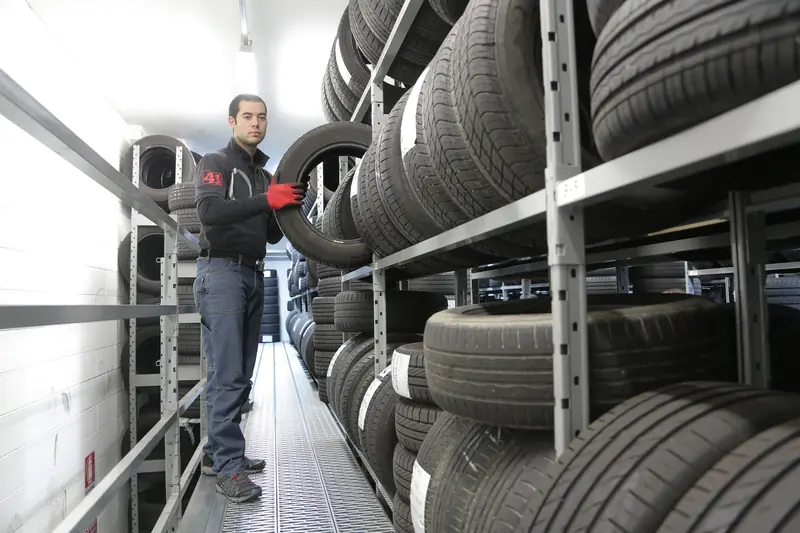
How you position the tires depends on whether they are mounted on rims. Tires mounted on wheels are best stored either hung from hooks or stacked flat, because standing them upright on rims for long periods can stress them. Unmounted tires without wheels are the opposite: store them standing upright and rotate their position occasionally, since stacking them flat for months can deform the bottom tire under the weight of the stack. Matching the method to the tire prevents flat spots and distortion.
Label your tires for easy remounting
Finally, label your tires so remounting is easy and correct. Mark each one with its position on the vehicle, such as front left or rear right, before you take them off. This lets you rotate them properly when they go back on and helps you track wear over time. Store them thoughtfully, and your off-season set will be ready and safe when the weather turns and it is time to swap them back.
Frequently asked questions
Should I use tire dressing before storing tires? No, skip tire dressings and protectants for storage, since many contain compounds that can work against the rubber over the long term. A clean, dry tire is all you need.
Should tires be stored standing up or lying flat? Tires mounted on wheels are best hung or stacked flat, while unmounted tires without wheels should stand upright and be rotated occasionally to prevent deforming.
What is the best place to store tires? A cool, dry, dark spot away from direct sunlight and temperature extremes, away from electric motors or furnaces that generate ozone. A climate-controlled basement often beats an uninsulated garage.
Why should I bag tires before storing them? Sealing each tire in an airtight bag with the air removed limits evaporation of the oils that keep rubber supple and reduces exposure to ozone, a leading cause of cracking.
Popular right now
- Best Tool Hanging SystemsBuying guide
- Best PegboardsBuying guide
- Building a Mechanic's Tool Kit From ScratchArticle
- Best Heavy-Duty ShelvingBuying guide
- Best WorkbenchesBuying guide
- Epoxy vs Tile Garage FlooringArticle
Based on the last 28 days of search and visitor data.